
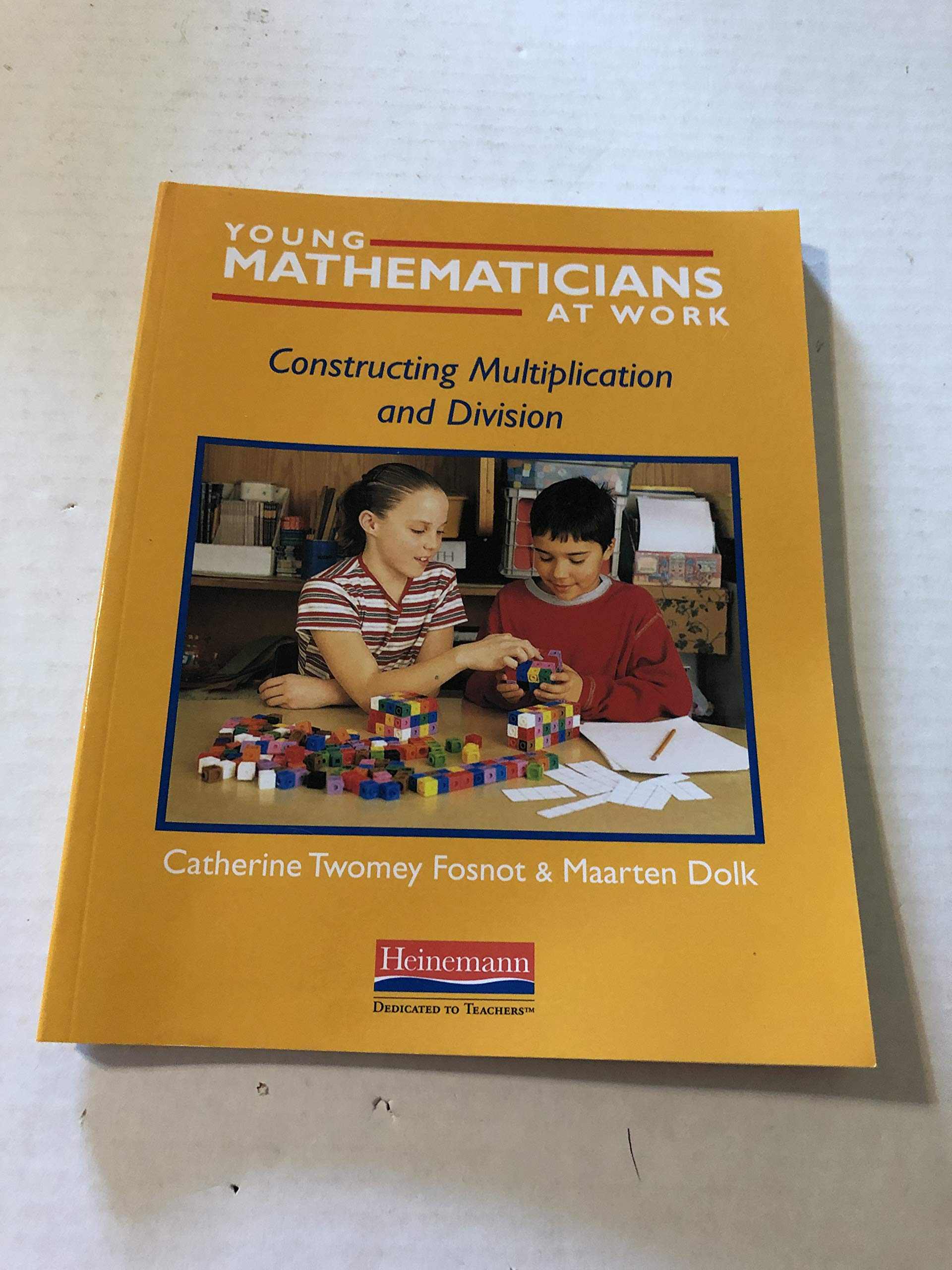
Title
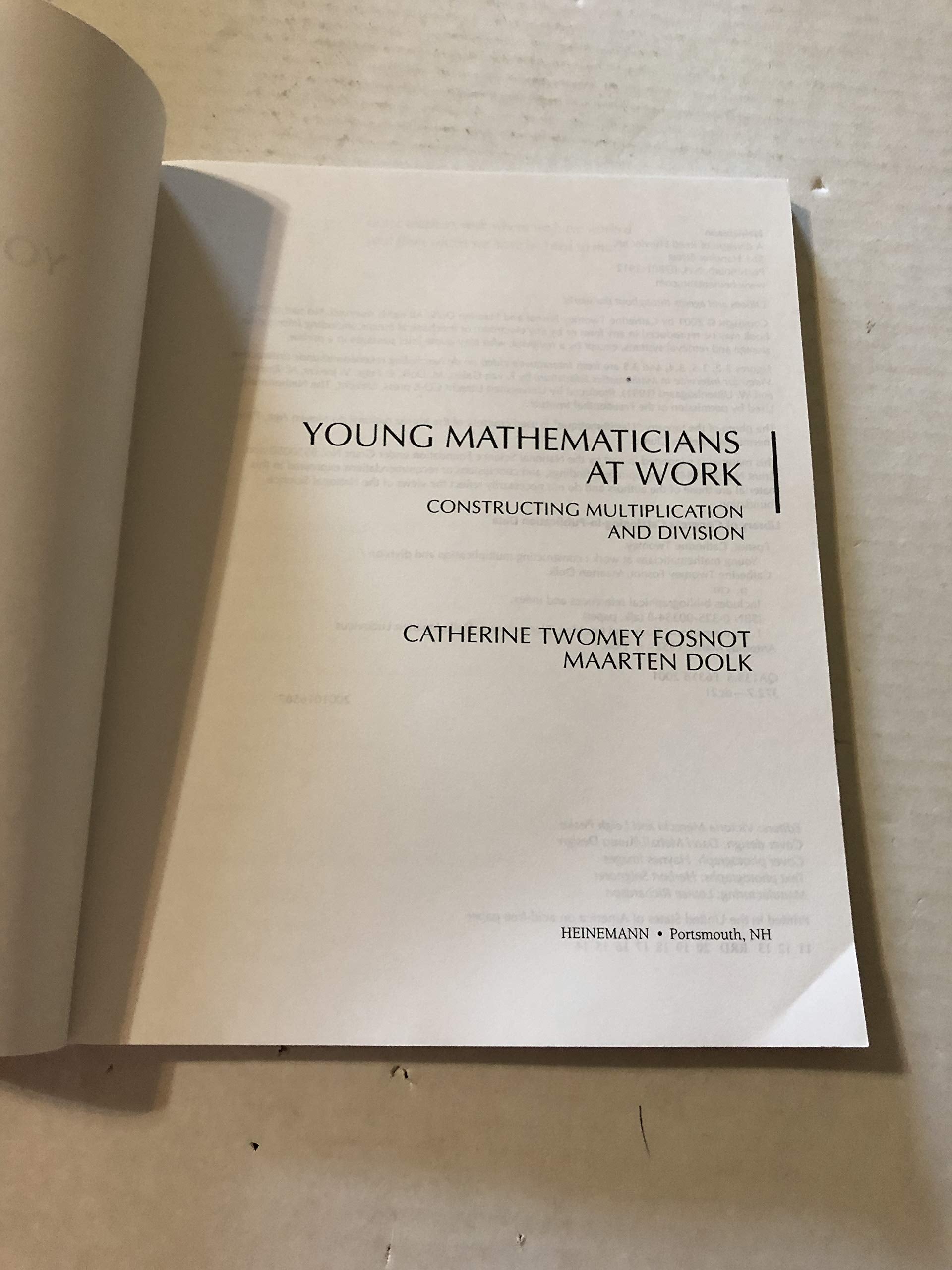
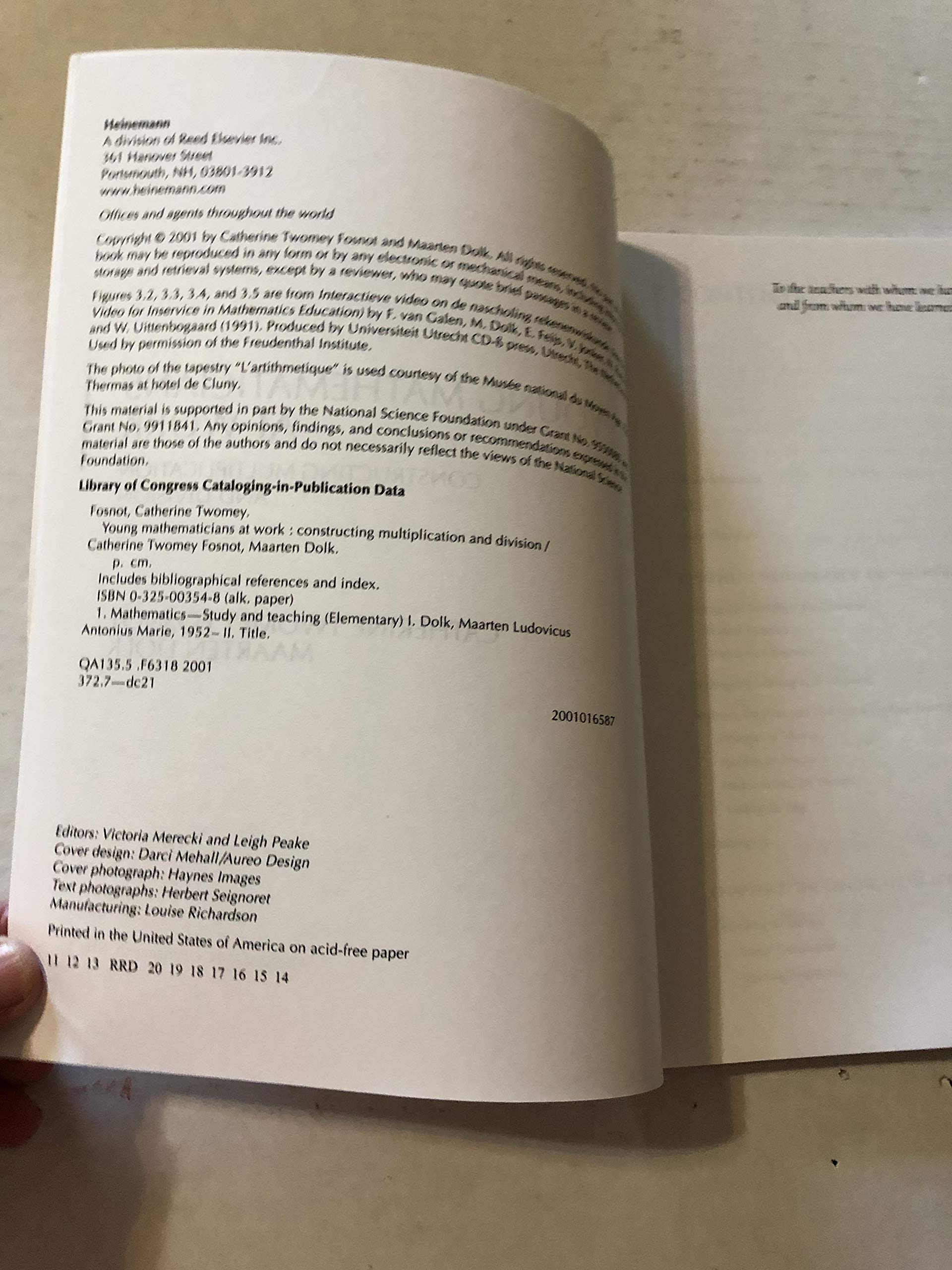
Young Mathematicians At Work: Constructing Multiplication And Division,New
Sold by Ergodebooks, an authorized reseller.
Returns accepted within 30 days | support@ergodebooks.com
Shipping Information
- Free Standard Shipping — United States only
- Processing Time: 3–5 business days
- Estimated Delivery: 6–10 business days after dispatch
- Double-boxed, fully insured & discreetly packaged
- Tracking number sent via email once dispatched
Returns & Refund
Returns accepted within 30 days of delivery.
Damaged or Defective Item
Free return shipping + replacement or full refund
Wrong Item Received
Free return shipping + replacement or full refund
Change of Mind
Return shipping at customer's expense · 25% restocking fee applies
Payment Option

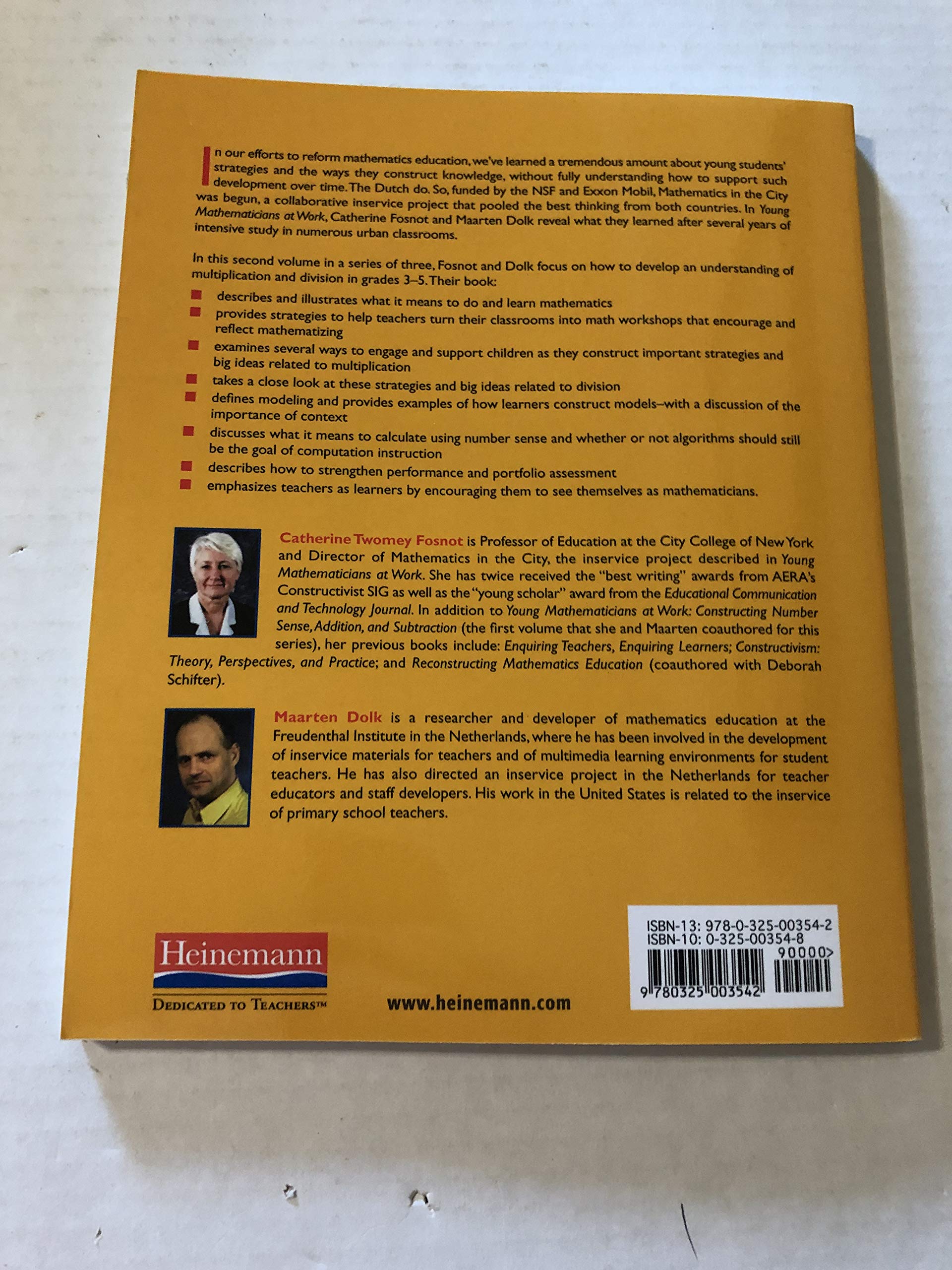
In Our Efforts To Reform Mathematics Education, We'Ve Learned A Tremendous Amount About Young Students' Strategies And The Ways They Construct Knowledge, Without Fully Understanding How To Support Such Development Over Time. The Dutch Do. So, Funded By The Nsf And Exxon Mobil, Mathematics In The City Was Begun, A Collaborative Inservice Project That Pooled The Best Thinking From Both Countries. In Young Mathematicians At Work, Catherine Fosnot And Maarten Dolk Reveal What They Learned After Several Years Of Intensive Study In Numerous Urban Classrooms.In This Second Volume In A Series Of Three, Fosnot And Dolk Focus On How To Develop An Understanding Of Multiplication And Division In Grades 35. Their Book: Describes And Illustrates What It Means To Do And Learn Mathematics Provides Strategies To Help Teachers Turn Their Classrooms Into Math Workshops That Encourage And Reflect Mathematizing Examines Several Ways To Engage And Support Children As They Construct Important Strategies And Big Ideas Related To Multiplication Takes A Close Look At The Strategies And Big Ideas Related To Division Defines Modeling And Provides Examples Of How Learners Construct Modelswith A Discussion Of The Importance Of Context Discusses What It Means To Calculate Using Number Sense And Whether Or Not Algorithms Should Still Be The Goal Of Computation Instruction Describes How To Strengthen Performance And Portfolio Assessment Emphasizes Teachers As Learners By Encouraging Them To See Themselves As Mathematicians.
⚠️ WARNING (California Proposition 65):
This product may contain chemicals known to the State of California to cause cancer, birth defects, or other reproductive harm.
For more information, please visit www.P65Warnings.ca.gov.
- Q: How many pages does this book have? A: This book has one hundred ninety-two pages. It provides a comprehensive exploration of mathematics education strategies.
- Q: What is the binding type of this book? A: The binding type is paperback. This makes it lightweight and portable for easy handling.
- Q: What are the dimensions of the book? A: The dimensions are seven point four inches in length, zero point four one inches in width, and nine point three inches in height. These measurements make it a manageable size for reading.
- Q: What age group is this book suitable for? A: This book is suitable for students in grades three to five. It focuses on developing understanding in multiplication and division for this age range.
- Q: How can teachers use this book effectively? A: Teachers can use this book to transform classrooms into math workshops. It provides strategies that encourage students to engage with mathematical concepts.
- Q: Is this book appropriate for self-study? A: Yes, this book is appropriate for self-study. It includes clear explanations that can help individuals learn multiplication and division concepts independently.
- Q: How should I store this book to keep it in good condition? A: Store this book in a cool, dry place away from direct sunlight. This will help prevent damage to the cover and pages.
- Q: Can I clean the cover of this book? A: Yes, you can gently wipe the cover with a soft cloth. Avoid using harsh chemicals that could damage the material.
- Q: What if my book arrives damaged? A: If your book arrives damaged, you should contact customer support for a replacement. They typically have a straightforward return policy.
- Q: Is this book suitable for beginners in mathematics? A: Yes, this book is suitable for beginners in mathematics. It introduces concepts in a way that is accessible to young learners.
- Q: What kind of teaching strategies does this book discuss? A: The book discusses strategies that help teachers turn their classrooms into engaging math workshops. It emphasizes hands-on learning and student participation.
- Q: How does this book support teachers in their professional development? A: This book encourages teachers to view themselves as learners. It provides insights into effective teaching practices in mathematics education.
- Q: Are there any specific mathematical models discussed in the book? A: Yes, the book defines modeling and provides examples of how learners construct models. It emphasizes the significance of context in understanding mathematics.
- Q: What themes are explored in this book? A: Themes explored include multiplication and division understanding, number sense, and the role of algorithms in computation instruction. It addresses key concepts in elementary mathematics.
- Q: Does the book provide assessment strategies for teachers? A: Yes, the book discusses performance and portfolio assessment strategies. These are designed to enhance teachers' understanding of student progress.