
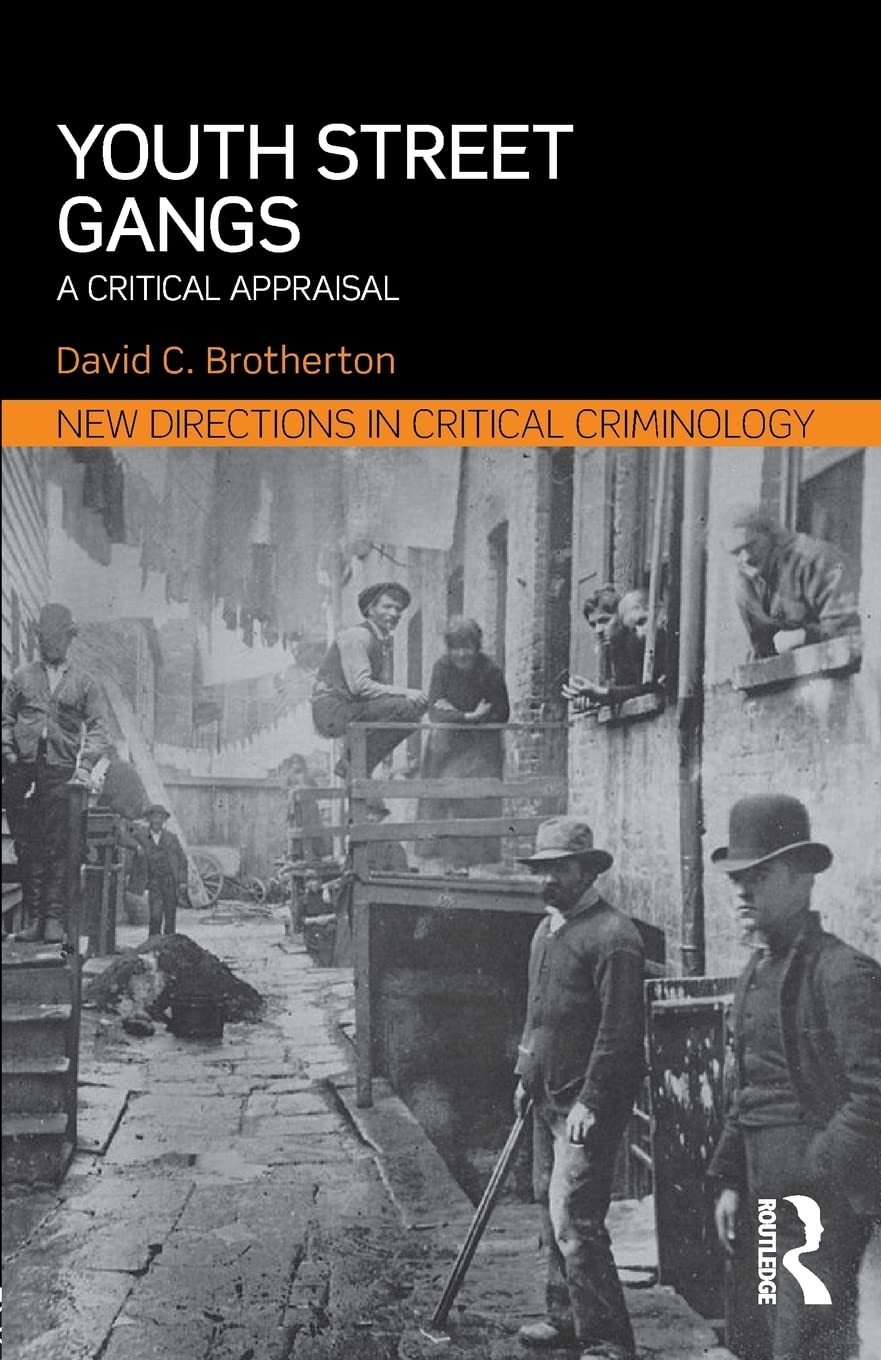
Title
Youth Street Gangs: A critical appraisal (New Directions in Critical Criminology),Used
Sold by Ergodebooks, an authorized reseller.
Returns accepted within 30 days | support@ergodebooks.com
Shipping Information
- Free Standard Shipping — United States only
- Processing Time: 3–5 business days
- Estimated Delivery: 6–10 business days after dispatch
- Double-boxed, fully insured & discreetly packaged
- Tracking number sent via email once dispatched
Returns & Refund
Returns accepted within 30 days of delivery.
Damaged or Defective Item
Free return shipping + replacement or full refund
Wrong Item Received
Free return shipping + replacement or full refund
Change of Mind
Return shipping at customer's expense · 25% restocking fee applies
Payment Option

Gangs have been heavily pathologized in the last several decades. In comparison to the pioneering Chicago School's work on gangs in the 1920s we have moved away from a humanistic appraisal of and sensitivity toward the phenomenon and have allowed the gang to become a highly plastic folk devil outside of history. This pathologization of the gang has particularly negative consequences for democracy in an age of punishment, cruelty and coercive social control.This is the central thesis of David Brothertons new and highly contentious book on street gangs. Drawing on a wealth of highly acclaimed original research, Brotherton explores the socially layered practices of street gangs, including community movements, cultural projects and sites of social resistance. The book also critically reviews gang theory and the geographical trajectories of streets gangs from New York and Puerto Rico to Europe, the Caribbean and South America, as well as statesponsored reactions and the enabling role of orthodox criminology.In opposition to the dominant gang discourses, Brotherton proposes the development of a critical studies approach to gangs and concludes by making a plea for researchers to engage the gang reflexively, paying attention to the contradictory agency of the gang and what gang members actually tell us. The book is essential reading for academics and students involved in the study of juvenile delinquency, youth studies, deviance, gang studies and cultural criminology.
⚠️ WARNING (California Proposition 65):
This product may contain chemicals known to the State of California to cause cancer, birth defects, or other reproductive harm.
For more information, please visit www.P65Warnings.ca.gov.
- Q: What is the main focus of 'Youth Street Gangs: A critical appraisal'? A: The book critically examines the pathologization of street gangs, exploring their social practices and the implications for democracy and social control.
- Q: Who is the author of this book? A: The author is David C. Brotherton, who draws on original research to analyze street gangs.
- Q: What topics are covered in the book? A: The book covers gang theory, community movements, cultural projects, social resistance, and the geographical trajectories of street gangs across various regions.
- Q: How many pages does the book have? A: The book has 246 pages.
- Q: What is the publication date of this book? A: The book was published on May 5, 2015.
- Q: Is this book suitable for academic study? A: Yes, it is essential reading for academics and students involved in juvenile delinquency, youth studies, deviance, gang studies, and cultural criminology.
- Q: What edition of the book is available? A: This is the first edition of 'Youth Street Gangs: A critical appraisal'.
- Q: What type of binding does this book have? A: The book is available in paperback binding.
- Q: What are the key themes discussed in the book? A: Key themes include the critical studies approach to gangs, the contradictory agency of gang members, and the need for reflexive engagement in gang research.
- Q: What is the condition of the book being sold? A: The book is brand new.