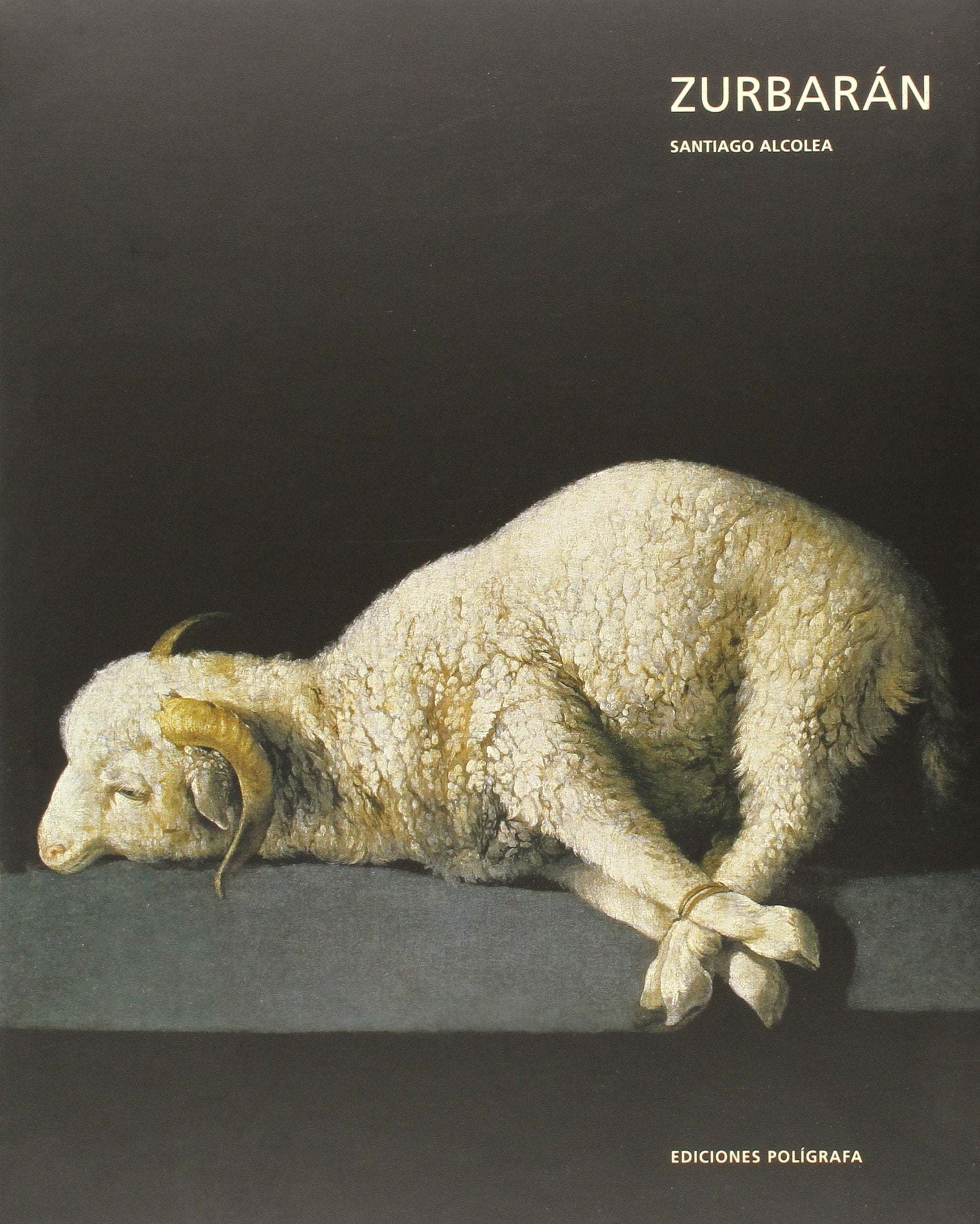
Starker than Velzquez and more ascetic than El Greco, Francisco Zurbarn (15981664) is easily among the finest of seventeenthcentury Spanish painters. Apprenticed in Seville, he quickly gravitated toward the use of chiaroscuro, possibly having seen paintings by Caravaggio there: he was later to become known as the Spanish Caravaggio. But Zurbarns temperament, as it is realized in his painting, appears more melancholy, and therefore less foreboding, than Caravaggios, and his religious subjects are almost exclusively Christian. He developed a characteristic image repertoire around monasticism and martyrs and made a speciality of the Carthusians, whose white robes he took evident pleasure in depicting. His bestknown work may be his 1631 Apotheosis of Saint Thomas Aquinas, now housed in the Seville Museum. It was around this time that Zurbarns star reached its peak, as he was appointed court painter to Philip IV. Later, toward the end of his life, Zurbarns harsh chiaroscuro style fell from favor, but his reputation was restored in the twentieth century, in part through the concerns of Cubism and its attraction to precedents for an emphatic plasticity. In this monograph, illustrated with 114 color plates, Santiago Alcolea, a scholar of seventeenthcentury Spanish art and the author of previous books on Velzquez and El Greco, provides us with an overview of Zurbarns artistic career, dividing it into four stylistic phases and reproposing his relevance for our times.
⚠️ WARNING (California Proposition 65):
This product may contain chemicals known to the State of California to cause cancer,
birth defects, or other reproductive harm.
For more information, please visit
www.P65Warnings.ca.gov.
<div class="dynamic-checkout__content" id="dynamic-checkout-cart" data-shopify="dynamic-checkout-cart"> <shopify-accelerated-checkout-cart wallet-configs="[{"supports_subs":true,"supports_def_opts":false,"name":"shop_pay","wallet_params":{"shopId":73758048501,"merchantName":"Ergodebooks","personalized":true}},{"supports_subs":false,"supports_def_opts":false,"name":"amazon_pay","wallet_params":{"checkoutLanguage":"en_US","ledgerCurrency":"USD","placement":"Cart","sandbox":false,"merchantId":"A1G1ZY975O1T6J","productType":"PayAndShip","design":"C0002"}},{"supports_subs":true,"supports_def_opts":false,"name":"paypal","wallet_params":{"shopId":73758048501,"countryCode":"US","merchantName":"Ergodebooks","phoneRequired":true,"companyRequired":false,"shippingType":"shipping","shopifyPaymentsEnabled":true,"hasManagedSellingPlanState":false,"requiresBillingAgreement":false,"gatewayType":"MANAGED","merchantId":"L873BZSC9NMQS","sdkUrl":"https://www.paypal.com/sdk/js?components=buttons\u0026commit=false\u0026currency=USD\u0026locale=en_US\u0026client-id=AbasDhzlU0HbpiStJiN1KRJ_cNJJ7xYBip7JJoMO0GQpLi8ePNgdbLXkC7_KMeyTg8tnAKW4WKrh9qmf\u0026merchant-id=L873BZSC9NMQS\u0026intent=authorize","serviceableCountryCodes":["AE","AR","AT","AU","BE","BG","CA","CH","CO","CZ","DE","DK","EE","ES","FI","FR","GB","HR","HU","IE","IL","IN","IT","JP","LT","LU","LV","MX","NL","PL","PT","SA","SE","SG","SI","SK","TR","US"]}}]" access-token="c0f52a66b386e9fa5c0ab4c2febc737c" buyer-country="US" buyer-locale="en" buyer-currency="USD" shop-id="73758048501" cart-id="0fb5755c22418ff570ead96a3a893dda" enabled-flags="["a1d1f9a1"]" > <div class="wallet-button-wrapper"> <ul class='wallet-cart-grid wallet-cart-grid--skeleton' role="list" data-shopify-buttoncontainer="true"> <li data-testid='grid-cell' class='wallet-cart-button-container'><div class='wallet-cart-button wallet-cart-button__skeleton' role='button' disabled aria-hidden='true'> </div></li><li data-testid='grid-cell' class='wallet-cart-button-container'><div class='wallet-cart-button wallet-cart-button__skeleton' role='button' disabled aria-hidden='true'> </div></li><li data-testid='grid-cell' class='wallet-cart-button-container'><div class='wallet-cart-button wallet-cart-button__skeleton' role='button' disabled aria-hidden='true'> </div></li> </ul> </div> </shopify-accelerated-checkout-cart> </div>