
Title
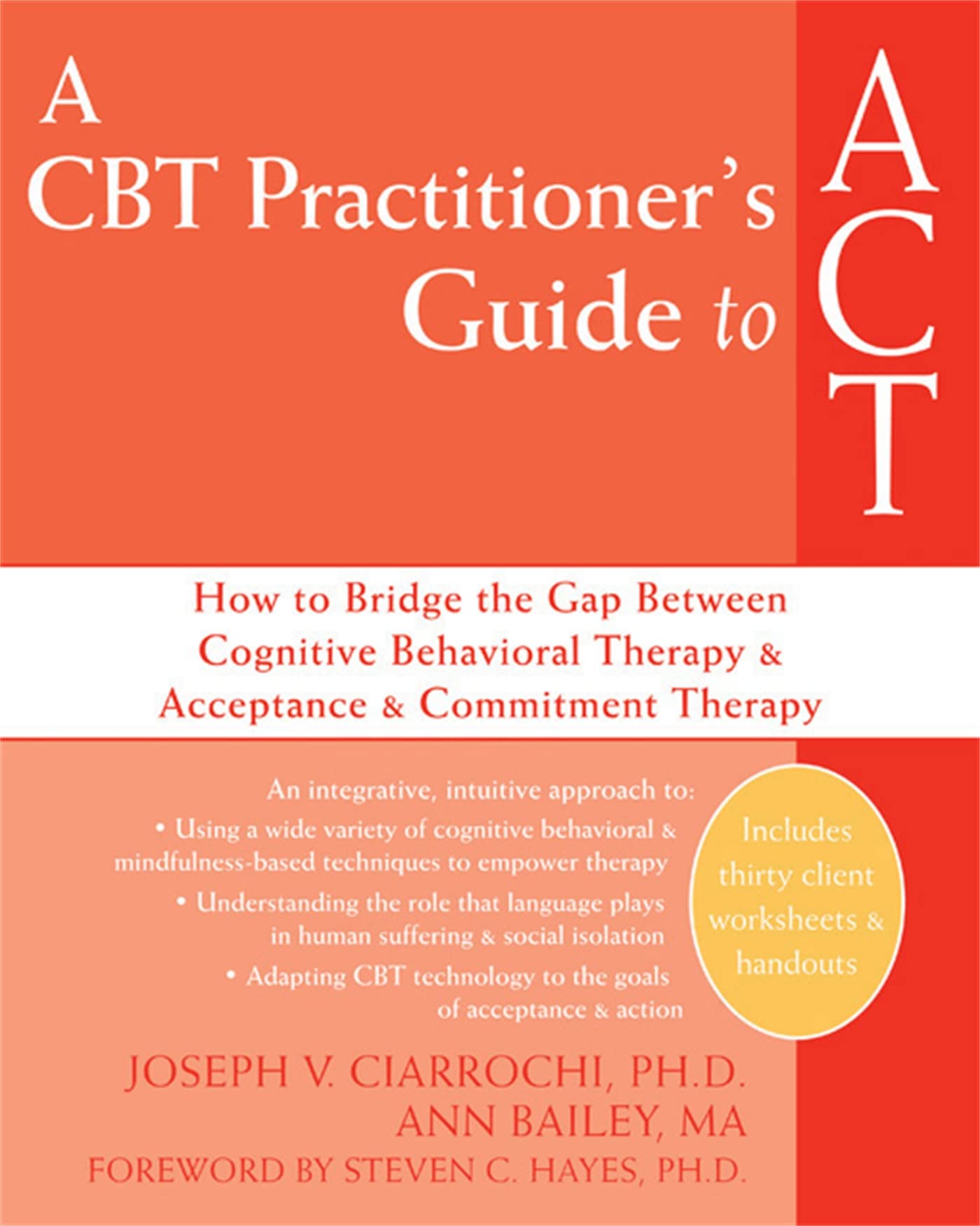
A Cbt Practitioner'S Guide To Act: How To Bridge The Gap Between Cognitive Behavioral Therapy And Acceptance And Commitment Ther
Sold by Ergodebooks, an authorized reseller.
Returns accepted within 30 days | support@ergodebooks.com
Shipping Information
- Free Standard Shipping — United States only
- Processing Time: 3–5 business days
- Estimated Delivery: 6–10 business days after dispatch
- Double-boxed, fully insured & discreetly packaged
- Tracking number sent via email once dispatched
Returns & Refund
Returns accepted within 30 days of delivery.
Damaged or Defective Item
Free return shipping + replacement or full refund
Wrong Item Received
Free return shipping + replacement or full refund
Change of Mind
Return shipping at customer's expense · 25% restocking fee applies
Payment Option

Interest In Acceptance And Commitment Therapy (Act) Is Expanding Rapidly. Many Of Those Who Are Interested In Act Are Trained Using A Mechanistic Cognitive Behavioral Therapy Model (Or Mcbt). Utilizing Both Act And Mcbt Together Can Be Difficult, Because The Approaches Make Different Philosophical Assumptions And Have Different Theoretical Models. The Core Purpose Of The Book Is To Help Provide A Bridge Between Act And Mcbt.The Emphasis Of This Book Will Be Applied Psychology, But It Will Also Have Important Theoretical Implications. The Book Will Highlight Where Act And Mcbt Differ In Their Predictions, And Will Suggest Directions For Future Research. It Will Be Grounded In Current Research And Will Make Clear To The Reader What Is Known And What Has Yet To Be Tested.The Core Theme Of A Cbtpractitioner'S Guide To Act Is That Act And Cbt Can Be Unified If They Share The Same Philosophical Underpinnings (Functional Contextualism) And Theoretical Orientation (Relational Frame Theory, Or Rft). Thus, From A Cbt Practitioner'S Perspective, The Mechanistic Philosophical Core Of Mcbt Can Be Dropped, And The Mechanistic Information Processing Theory Of Cbt Can Be Held Lightly And Ignored In Contexts Where It Is Not Useful. From An Act Practitioner'S Perspective, The Decades Of Cbt Research On Cognitive Schema And Dysfunctional Beliefs Provides Useful Information About How Clients Might Be Cognitively Fused And How This Fusion Might Be Undermined. The Core Premise Of The Book Is That Cbt And Act Can Be Beneficially Integrated, Provided Both Are Approached From A Similar Philosophical And Theoretical Framework.The Authors Acknowledge That Practitioners Often Have Little Interest In Extended Discussions Of Philosophy And Theory. Thus, Their Discussion Of Functional Contextualism And Rft Is Grounded Clearly In Clinical Practice. They Talk About What Functional Contextualism Means For The Practitioner In The Room, With A Particular Client. They Describe How Rft Can Help The Practitioner To Understand The Barriers To Effective Client Action.
⚠️ WARNING (California Proposition 65):
This product may contain chemicals known to the State of California to cause cancer, birth defects, or other reproductive harm.
For more information, please visit www.P65Warnings.ca.gov.
- Q: How many pages does the book have? A: The book has two hundred twenty-four pages. This length allows for an in-depth exploration of the integration between cognitive behavioral therapy and acceptance and commitment therapy.
- Q: What is the binding type of this book? A: The book is available in paperback binding. This makes it lightweight and portable, ideal for both casual reading and professional reference.
- Q: What are the dimensions of the book? A: The book measures seven point nine one inches in length, zero point five one inches in width, and nine point seven inches in height. These dimensions make it easy to handle and store.
- Q: Who is the author of this book? A: The author is Joseph Ciarrochi. He is known for his work in psychology and therapy, particularly in bridging different therapeutic approaches.
- Q: What is the primary focus of this book? A: The primary focus is on integrating cognitive behavioral therapy with acceptance and commitment therapy. It aims to provide practitioners with practical tools for effective client engagement.
- Q: Is this book suitable for beginners? A: Yes, this book is suitable for both beginners and experienced practitioners. It offers foundational knowledge while also addressing advanced concepts in therapy.
- Q: How can I apply the concepts from this book? A: You can apply the concepts by using the integrated approaches in your therapeutic practice. The book provides practical examples and case studies for better understanding.
- Q: Is this book appropriate for mental health professionals? A: Yes, it is highly appropriate for mental health professionals. It is designed to enhance their understanding and application of ACT and CBT in clinical settings.
- Q: What should I do if the book arrives damaged? A: If the book arrives damaged, you should contact the seller for a return or exchange. Most sellers have customer service policies in place to assist with such issues.
- Q: What if I find the content too complex? A: If you find the content too complex, consider rereading the chapters or consulting additional resources. The book aims to clarify complex theories in a practical manner.
- Q: What research does the book reference? A: The book references current research in psychology, specifically studies related to acceptance and commitment therapy and cognitive behavioral therapy. This grounding in research supports its recommendations.
- Q: Can I use this book for self-help? A: Yes, you can use it as a self-help resource. It provides insights and practices that can be applied personally for better mental health.
- Q: What is the main theme of this book? A: The main theme is that ACT and CBT can be unified through shared philosophical underpinnings. This perspective aims to enhance therapeutic effectiveness.
- Q: Does the book include case studies? A: Yes, the book includes case studies. These examples illustrate how the integration of ACT and CBT can be applied in real-life therapeutic situations.
- Q: Is there a specific audience for this book? A: The book targets mental health practitioners, including therapists and counselors. It is designed to help them incorporate both ACT and CBT in their work.
- Q: What is the publisher of this book? A: The book is published by New Harbinger Publications. This publisher specializes in mental health and psychology literature.